Last year, I digitally manipulated vintage propaganda posters by erasing their original intent and adding my own message to promote the Harris/Walz campaign using hot button topics that appealed to liberal voters. I posted them on my social media accounts and triumphantly sat back while my propos (this is what I call my propaganda posters–inspired by Plutarch Heavensbee) infiltrated the algorithms. As we sit on the brink of authoritarian rule, just six months after the election, I can’t help but wonder—where did I go wrong?
As an artist, one of my favorite pastimes is browsing through public domain image collections on websites like The Met, Getty, and Raw Pixel. I take old paintings, primarily of women, add funny, insightful, or irreverent aphorisms in fancy typography, to create a delightful juxtaposition of modern culture and old-world aesthetics that I print on cards and prints and sell.
When I started seeing old American propaganda posters, I was inspired. After all, these posters aren’t just information, they are art. The designs have a nostalgic charm and there’s an odd sort of earnestness to their messages. Most of what I do involves adding type to wordless art, so I thought it would be fun to use art that was meant to go with text, and change the words.
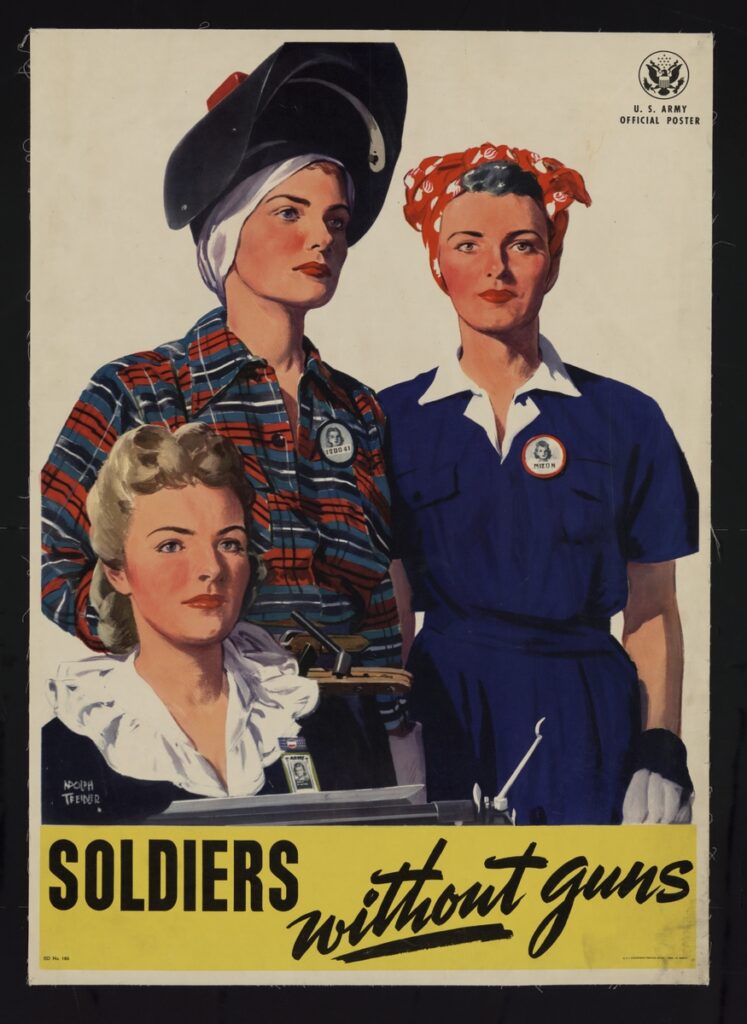
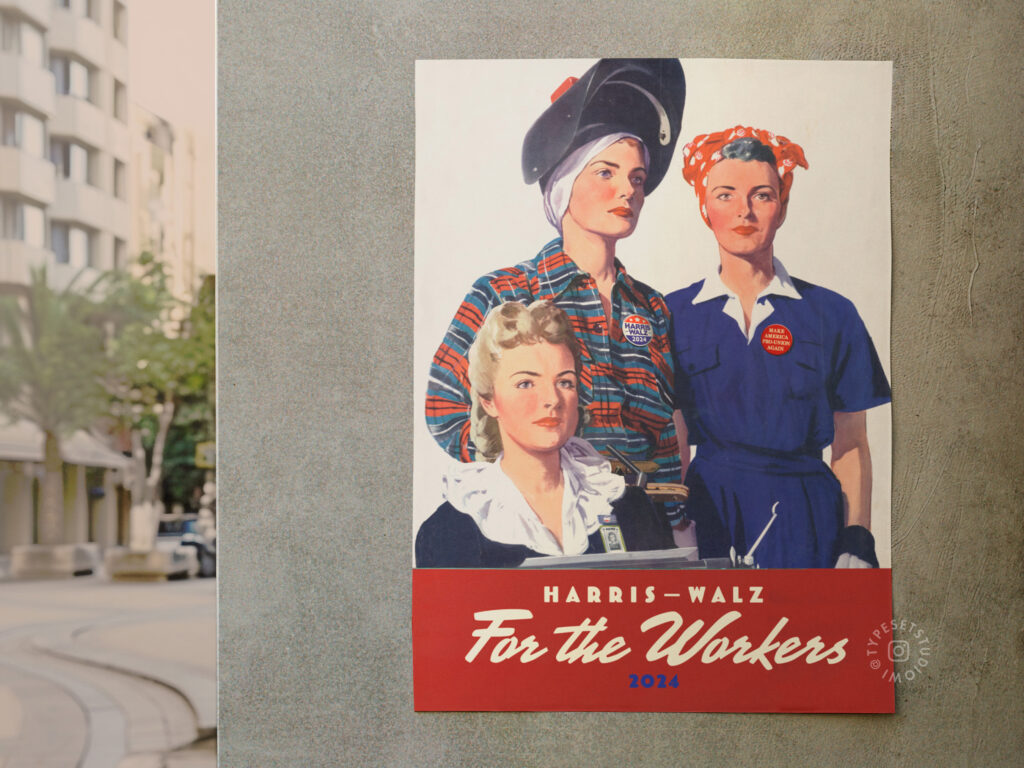
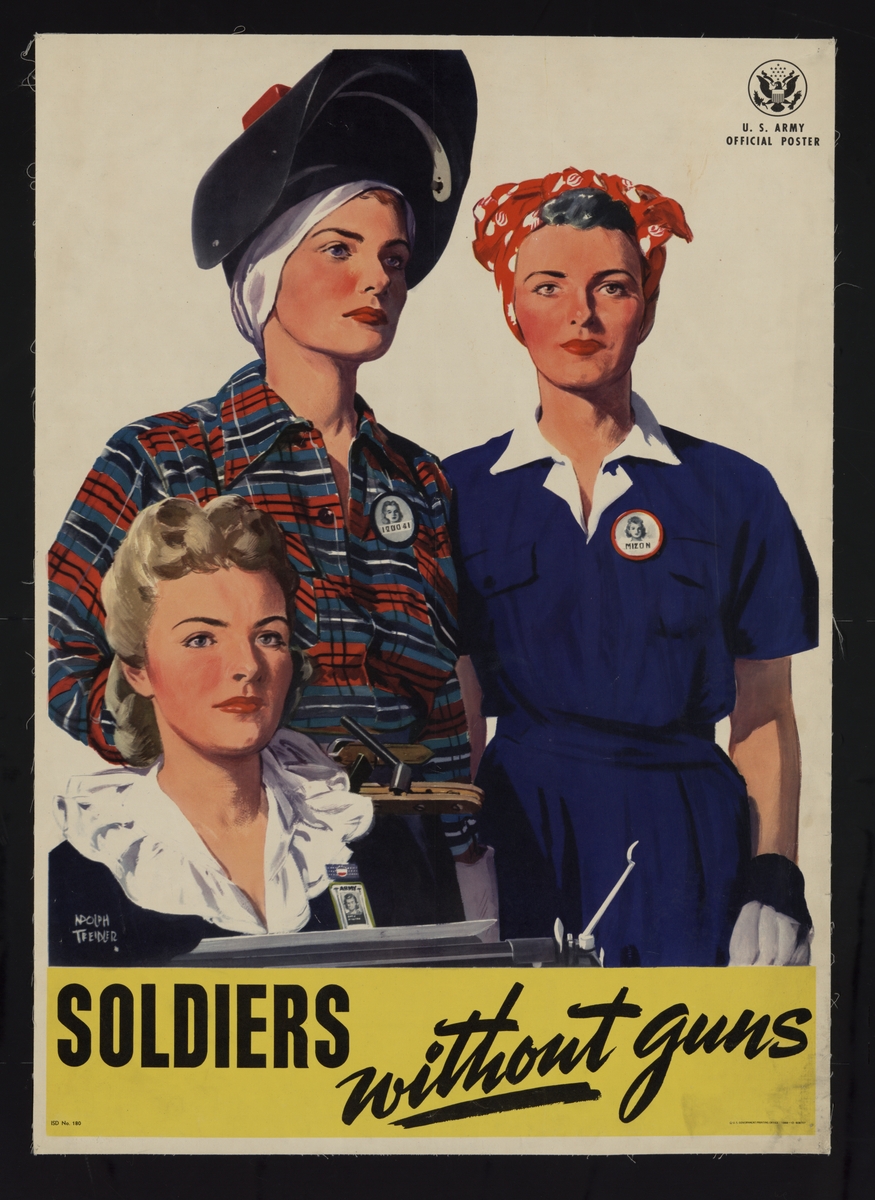
For this design I used an Army poster meant to recruit women to the workforce. I gave them new buttons and added the text, “Harris-Walz for the Workers.”
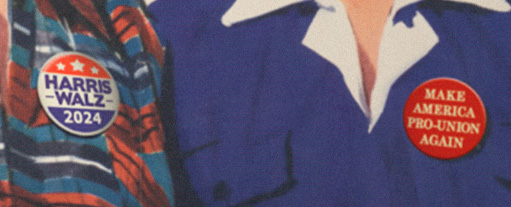
As I reflect on media literacy, the lost election, and my design/propaganda skills, I’ve started asking myself some important questions about the media I created. Were my propos effective? Were they ethical? Were they legal? Will they soon be illegal?
Here’s some conclusions I’ve come to:
Were my propos effective?
Clearly no. Harris/Walz lost the 2024 election, in a heartbreaking defeat. However, in my defense, they were likely only seen by my tens of like-minded followers, mostly friends and family, who were already going to vote for the democrat candidate. To truly gauge their effectiveness I would have needed more exposure, and I’m not good at Instagram.
Were my propos ethical?
Unfortunately, there are some ethical problems with my propos. While propaganda isn’t inherently unethical, I do think I failed some pretty significant ethical tests. Nothing on my posters indicated the source, or creator. My designs could have been shared without context, and that could have led to confusion. I also didn’t fully evaluate the historical context of the original posters before creating mine, which could create mixed messages or promote harmful narratives.
Were my propos legal?
Yes? The posters are in the public domain for personal and commercial use. But, is there some obscure law that hasn’t been enforced since the 1940s about manipulating government-commissioned art in a way that misrepresents its original meaning? I hope not.
Should I take them down so I’m not targeted by the current administration?
In conclusion, while there were some ethical considerations I should have evaluated further, my propos did not help or harm anyone. All kidding aside, these are important considerations for artists and designers and I would like to explore more of the implications of propaganda combined with art in future posts.
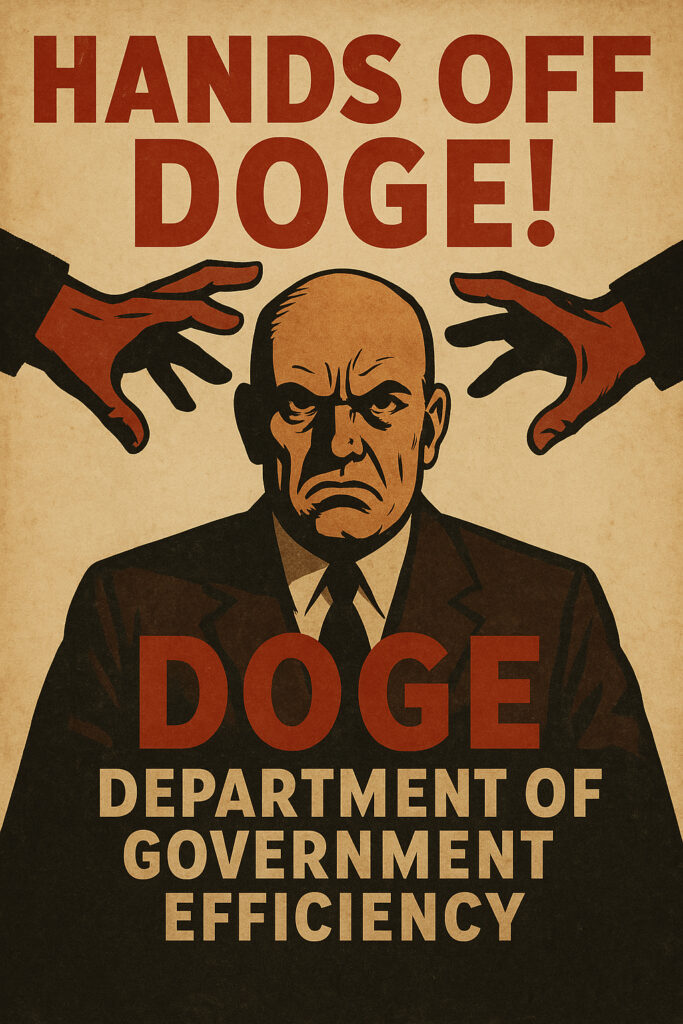
For fun I asked ChatGPT to create a propaganda poster for the “hands off” campaign against DOGE. It really sends a message. The message is unclear.