
Misinformation is a hot button issue these days, as its existence abounds. Content creators are using social media to debunk misinformation and expose media bias. But, it’s probably wise to educate ourselves outside of social media too. Websites like Snopes have been around for awhile, fact-checking rumors, conspiracy theories and statements made by public figures. However, as AI proliferates and creating content becomes easier, more tools have been created to help us combat misinformation and learn media literacy.
The News Literacy Project is a nonprofit, and nonpartisan organization working with educators in every state on a mission to teach news literacy to students K-12, so that every student is skilled in critical thinking and empowered to be well-informed, and civically engaged citizens by the time they graduate from high school. The organization is built on a belief that a free press is critical to democracy and they are committed to standards-based journalism.
To that end they have created Rumor Guard. The website collects viral rumors, fact-checks them and then explains how they use their methodology to evaluate the rumor. You can use the website to find out if a single rumor is true, and learn their techniques and strategies to become a fact checker yourself. I browsed the website to evaluate how useful I believe it is in educating users about misinformation and news literacy.
Each rumor’s post shows a screenshot of the social media post in question, and provides a summary of the context in which the rumor was circulating.
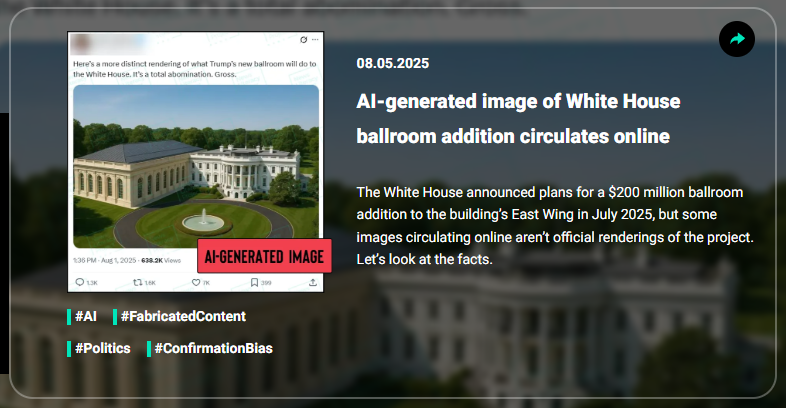
Next, Rumor Guard provides a quick summary of the claim with tips on how the user could evaluate this content. Next, they use their five factors of credibility to evaluate the rumor, with an explanation of each.
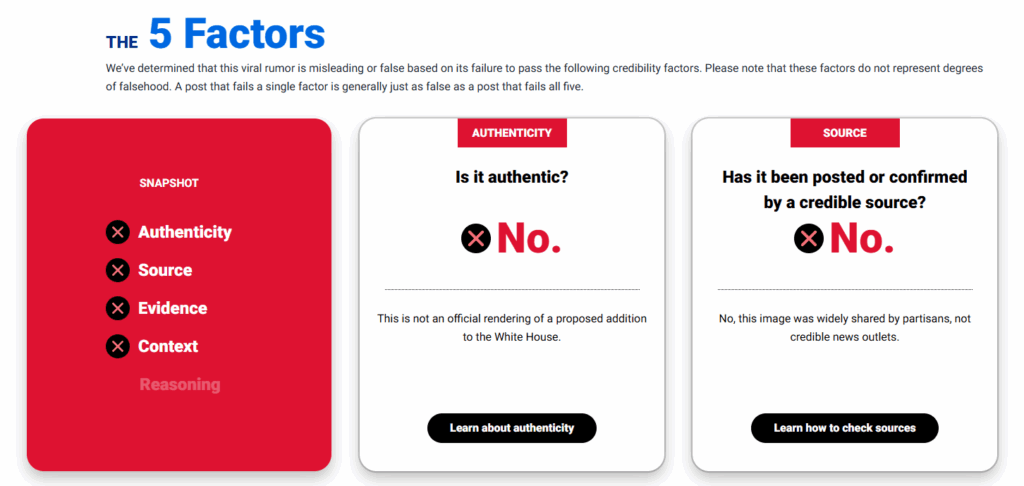
Overall, I think this is a great concept and they have done a great job with the site. The structure allows you to move smoothly through the site, whether to new rumors or to understanding topics. The hashtags are called topics, and are very similar to social media sites, however some of them are more than just a topic, for example this hashtag also explains the cognitive bias, confirmation bias.
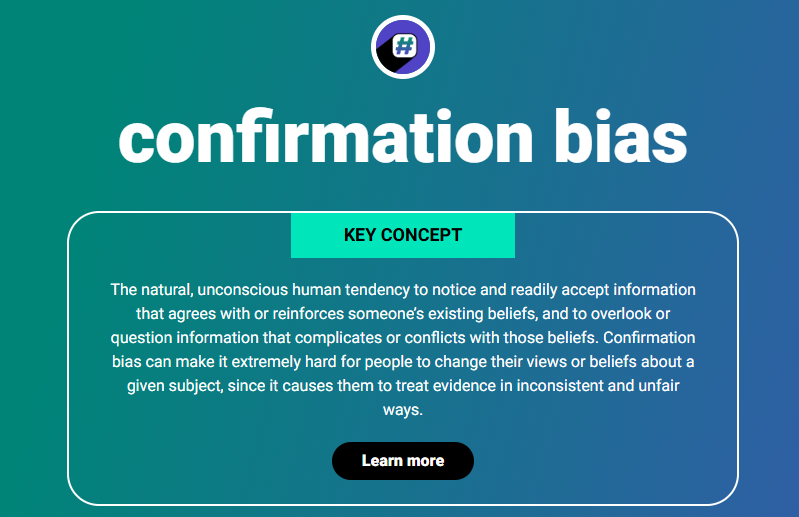
When I click on the learn more button, it takes me to a different website with more information about that topic, but I think it would be great to have all the information on one site, and if they also had a way of accessing things like cognitive biases, all in one place.
Another thing I noticed was that Rumor Guard does not have its own Instagram account. I think incorporating social media posts would be extremely beneficial since that’s where many of these rumors originate. I think Ground News does a real great job of this, as shown below:
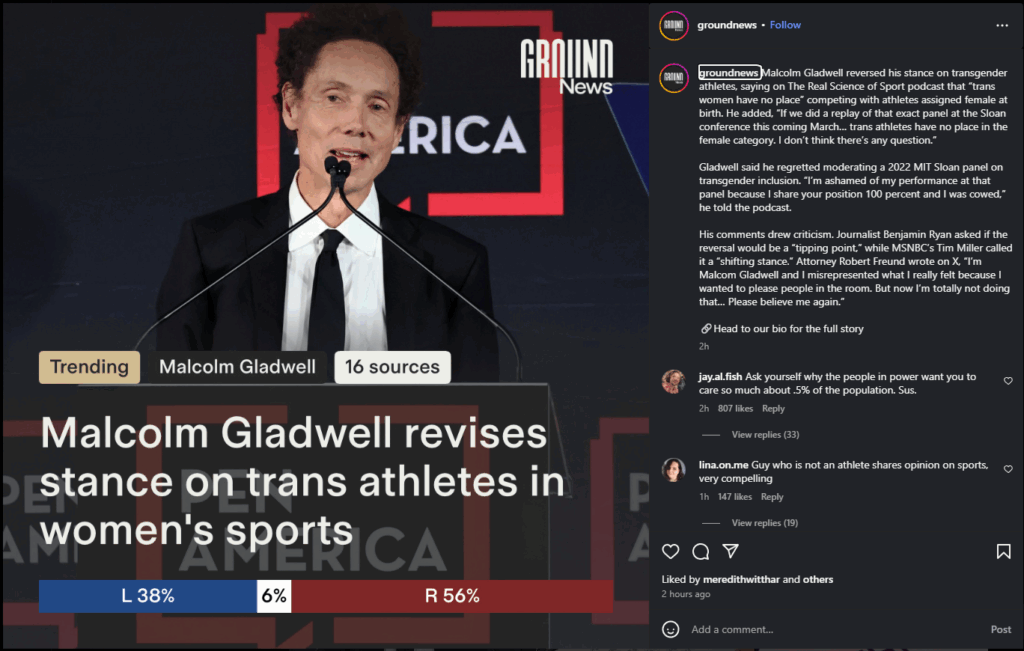
Overall, Rumor Guard does a great job of sharing information while educating. If there was an effective way to scale this to cover more of the rumors we are inundated with daily, that would be ideal.
Fake It To Make It
There are a variety of media and news literacy games online, but I recently tried out Fake It to Make It is an incredible feat by developer Amanda Warner. The game allows you to become a fake news mogul, by making websites with fake news, and sharing fake news articles on social media using fake profiles. You pick the site’s name and choose a logo. The game gives you a real budget to use for buying websites and social media profiles and you can earn money by posting inflammatory content and getting lots of likes. Compared to other games that felt more like a learning activity, Fake It To Make It feels like real gameplay. By playing this game, you really learn just how much money can be made by creating clickbait online. Not only that, but you can really see how fast these types of websites proliferate when it is so cheap to create many of them.
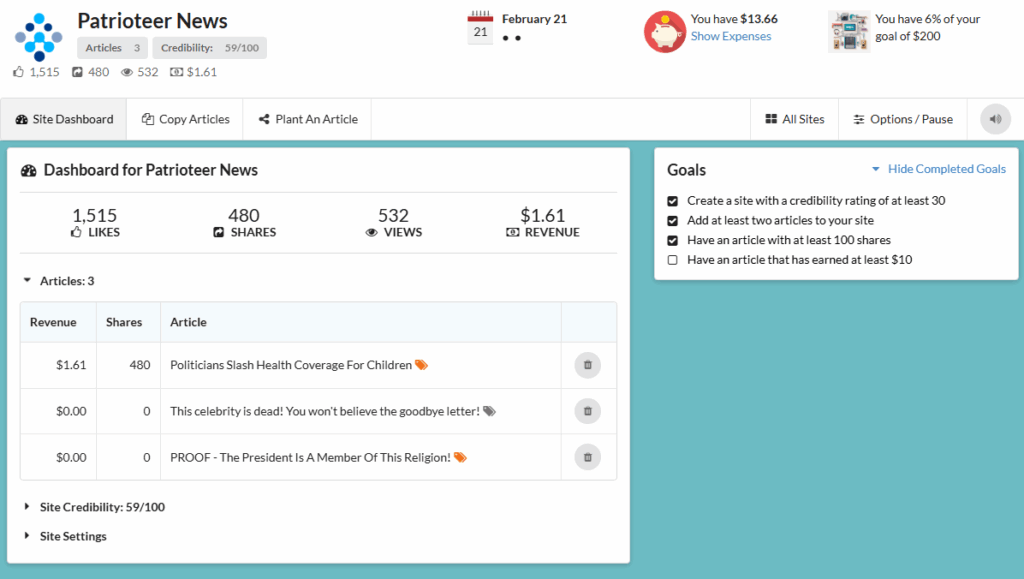
I am a big fan of gamifying things to make them easier or more fun. Game Designer, Jane McGonigal talks about the value of games in one of my favorite Ted Talks.
These literacy tools are great to add to our toolkits or share with others. I hope more developers will get involved and integrate tools like these with other apps and sites we use on a regular basis.
Featured image: The Tailor Mouse (1902) watercolor art by Helen Beatrix Potter. Original public domain image from Wikipedia. Digitally enhanced by rawpixel. Original public domain image from Wikimedia Commons.