I didn’t vaccinate my daughter when she was born and the reasons aren’t what you might expect. 18 years ago, the natural health movement wasn’t as popular as it is today but like the anti-vaccine movement, it was growing. It was a family member of mine who told me that both of their colleague’s children had autism diagnoses following vaccinations. They believed the vaccinations caused autism. They gave me a stack of magazines to help inform my pregnancy and parenting decisions.
I became determined to avoid toxins at all costs and quickly learned that they are everywhere. I decided to have a drug-free childbirth and bought a hypnosis course. I figured out which mattresses, clothes and bath products were safe. And, I kept gathering information about vaccinations from different sources, in an attempt to make an informed decision. A lot of the misinformation that I encountered is still misinforming people today.
In 1998, Dr. Andrew Wakefield’s study purporting to link vaccines to autism, was published in the Lancet. We tell people to trust doctors and scientists, but the catalyst of the anti-vaccine movement was a study published in a scientific journal by a doctor. People usually don’t lead with that when they are trying to convince someone to vaccinate, but it is important to keep in mind when we are talking about propaganda and persuasion.
The study was fraudulent and has since been debunked, the journal retracted it, and the doctor has been charged with fraud and stripped of his licenses. But unfortunately before all of that happened, the misinformation had started spreading and convincing people like me not to vaccinate. People who understand the science know that it overwhelmingly supports vaccination, but most of us will never understand the science and so we have to trust someone. Even though the science wasn’t up for debate when Wakefield published his study, the media didn’t always portray that accurately. Sometimes presenting both sides of a story as having equal credibility, actually gives credibility to a false claim.
In my case, one of the biggest sources of information I used was Mothering magazine. Mothering was a natural parenting magazine that was published for over 35 years. It was full of well-written, thought-provoking articles, and some of them promoted anti-vaccine misinformation. Today I likely wouldn’t be so easily fooled, but just the fact that it was in a published, well-regarded magazine, lended credibility to the information.

I started vaccinating my daughter eventually, and let go of my anti-vaccination beliefs, but when COVID-19 happened, I really had to examine my reasons for not vaccinating. The first reason was a failure to understand the appeal to nature fallacy. “Vaccines aren’t natural” was a rallying cry in Mothering forums. The second reason was a lack of faith in “Western Medicine.” The third reason is that I did not have the media literacy skills to understand that a trusted media source can’t be trusted blindly. The fourth reason is that I trusted a close family member in her area of expertise.
Oh yeah, that’s the inconvenient part. The two people I mentioned in the beginning were medical professionals. A public health educator and a medical doctor. A lot of us have a stereotype in our head of people who believe misinformation as being hayseeds who are too stupid to understand that we can’t trust Facebook memes, but that’s not true. We are all susceptible to misinformation. And not everyone spreads misinformation knowingly and for-profit. My family member genuinely believed it and had nothing to gain from spreading it.
18 years ago there was a vast amount of information and misinformation available, as well as profiteers capitalizing from both. Today the amount of information is exponentially greater, and more sophisticated. The problem has moved beyond sharing memes on social media. There are whole networks that pass themselves off as legitimate now. There are influencers with media empires profiting off anti-vaccine propaganda. Heck, the United States president somehow managed to be vaccinated, claim credit for the vaccine, and still use anti-vaccine propaganda to gain supporters. It almost seems impossible to overcome. But I think we can do it if we all work on our media literacy skills.
Based on my experience, here’s some suggestions for being media literate and promoting media literacy:
- We are all susceptible to misinformation and propaganda. So let’s not use these types of conspiracy theories to shame people and tear them down.
- Misinformation can come from anywhere, including you and me. It’s inconvenient to realize that if you believed it you probably shared it. Think twice before you share information in-person too, even if it feels like “common sense” or “traditional wisdom.”
- Demonstrate media literacy everyday not just when it comes to controversial or hot-button topics. Don’t get into fisticuffs over vaccines with your red-pilled cousin. If you think they could use media literacy skills, start with admitting you don’t know whether the ghost pepper or the scotch bonnet pepper is the hottest and look it up, then check another source to be sure.
- If you realize that you’ve accidentally believed misinformation, tell other people. Explain why you believed it and why you changed your beliefs. Check.
Also, inconveniently for anti-vaxxers, my daughter developed autism without having been vaccinated, but she’s fine and now, fully vaccinated.
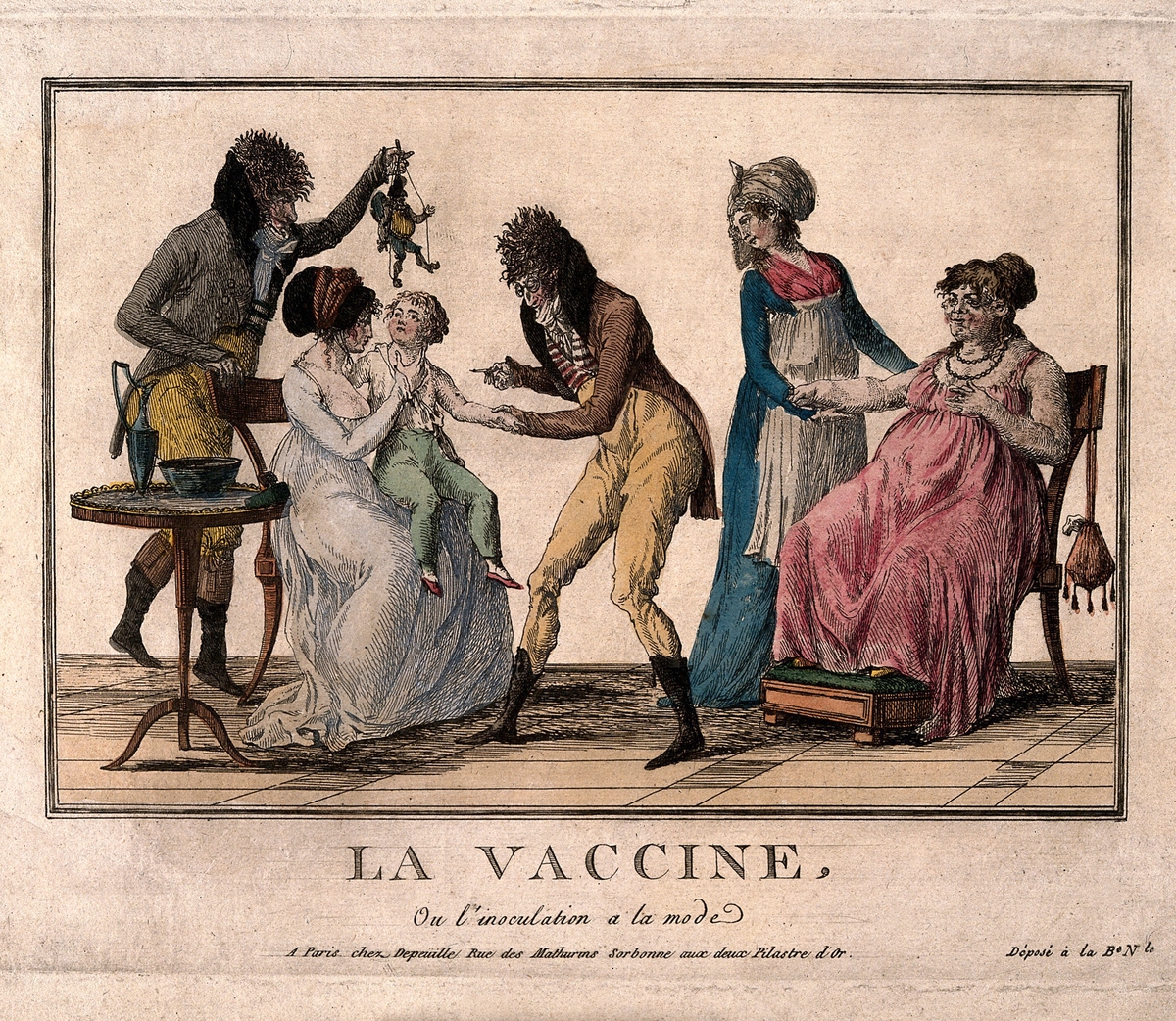
Featured Image: A corpulent woman provides the pustule for the vaccination of a child by a couple of dandified doctors. Etching, c. 1800.
Original public domain image from Wellcome Collection